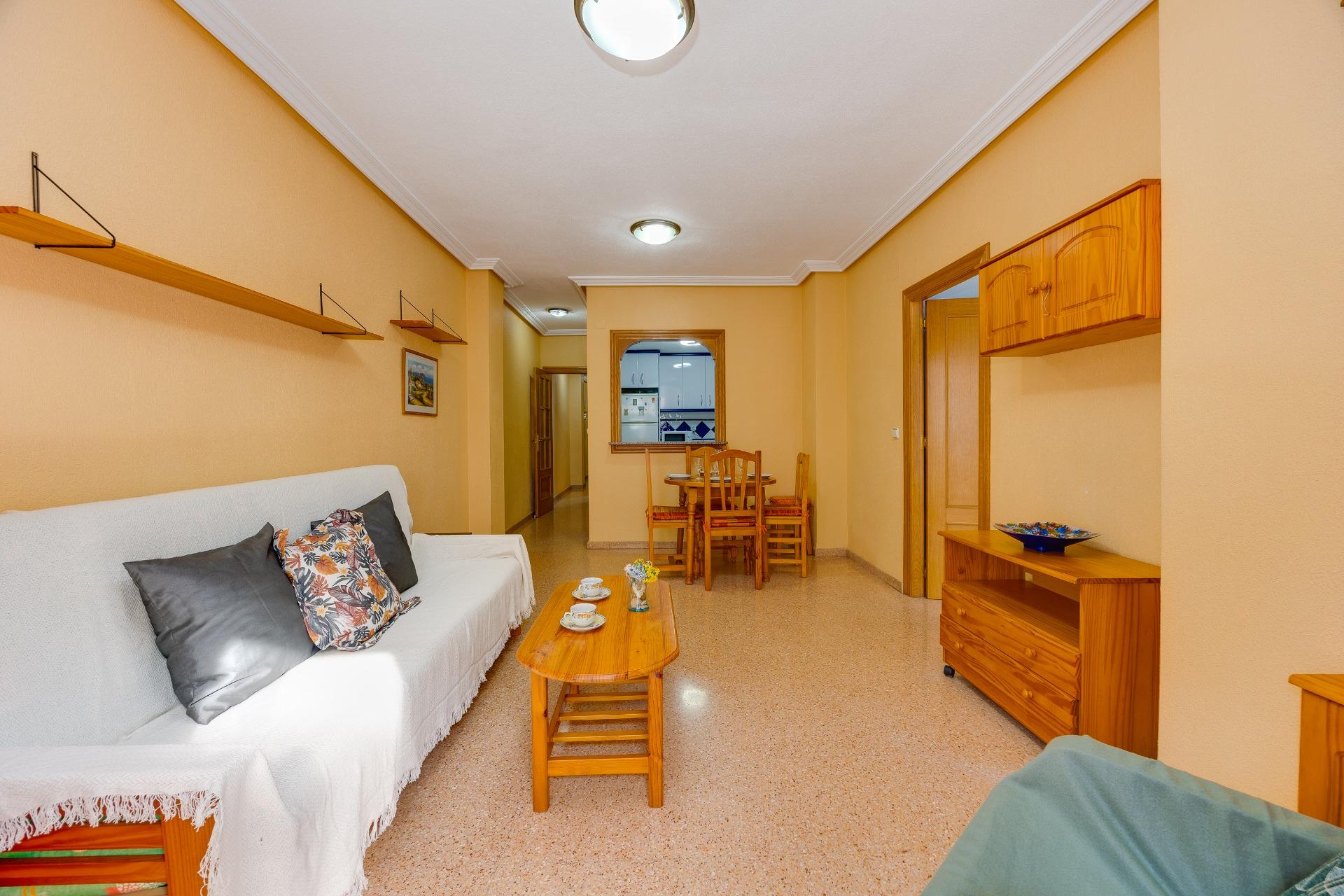
€151,500
Begane-Grond 2-Kamer Appartement op Zuidzijde in Playa del Cura, Torrevieja
Torrevieja · Playa del Cura
2 slaapkamers1 badkamer80m²
Built-in wardrobesSouth-facing orientationPrivate terrace+6

Founder & CEO· OceanHome, Torrevieja
Founder and CEO of OceanHome. Left Finland young, spent over a decade in Berlin and has built her career over the past 20 years in Spain. Lives on the Costa Blanca year-round.
Over Maya→This gets asked more than almost anything else about Torrevieja, usually after someone has seen a photograph of a person standing waist-deep in bright pink water. So, plainly: you are not supposed to swim in it, and even where nobody stops you, it is a poor idea. Here is the reasoning rather than just the rule.
The colour comes from Dunaliella salina, a single-celled alga that thrives where almost nothing else can, in brine far saltier than seawater. Under strong sun it produces large amounts of beta-carotene, the same class of pigment that makes carrots orange, as a natural sunscreen. That pigment is what you see. Artemia salina, the brine shrimp that graze on the algae, carry the same pigment through the food chain, which is also why the flamingos that feed here are pink.
The intensity moves with the season. Evaporation through the summer concentrates the brine and the algae, so the colour peaks in late summer; rain dilutes it and the surface can look pale rose or nearly white for a while afterwards. The second lagoon at La Mata is less salty and reads green rather than pink. Our fuller explanation sits in the complete guide to Torrevieja's salt lakes.
Two separate reasons overlap here, and it is worth understanding both because people assume the rule is arbitrary.
It is a protected natural park. The lagoons are the feeding ground for flamingos and a long list of waders. Wading through shallow feeding areas disturbs birds directly; sun cream, insect repellent and cosmetics wash off into a closed, evaporating body of water with nowhere to go. A hundred people a day doing something harmless individually is not harmless collectively.
It is a working industrial site. The lagoon is under salt-production concession. It is not a designated bathing water, nobody tests it, there are no lifeguards, and large parts of the shore are fenced because they are operational. A place can be beautiful and still be a factory floor.
Set the rules aside for a moment. Hypersaline water stings badly in the eyes and finds every cut and shaving nick you have. The bed is soft, deep mud under a crust that looks solid and is not, and people lose sandals in it every summer. The salt crystallises on your skin as it dries and abrades. And there are no showers anywhere at the lagoon, so you drive home caked in salt mud, which is exactly as unpleasant as it sounds and does your car seats no favours.
There is a genuine local history of people coating themselves in the lagoon mud and the salt crust, and a long-standing belief on this coast in the benefits of saline mud for skin conditions and joints. We are not going to sneer at it, but we are also not going to pretend it makes wading into a protected reserve acceptable.
The distinction that matters: a supervised mud or thalassotherapy treatment is a controlled product with sourced material, hygiene standards and somewhere to rinse. Scooping mud out of a bird reserve is not that. If the therapeutic angle is what draws you, look for a regulated spa or thalassotherapy facility rather than the lagoon itself, and take the medical claims with the scepticism you would apply anywhere else.
| You wanted | Do this instead |
|---|---|
| To float in very salty water | Swim in the Mediterranean off Playa del Cura or La Mata. Saltier than most seas you have swum in, supervised in season, and there are showers. |
| The photograph | Walk the signed lagoon access at the last hour of daylight. The colour is far better from the bank than from in the water. |
| The salt-mud treatment | A regulated spa or thalassotherapy facility, where the material is sourced and you can rinse off afterwards. |
| The wildlife | Take binoculars to the La Mata side early in the day: see our flamingo guide below. |
For the birds specifically, read flamingos in Torrevieja: where and when to see them. For the walking routes and parking, our pink lake visitor's guide covers it.
Torrevieja's real swimming is on its coastline, and the price difference between a beach-side and a lagoon-side address is the single biggest lever on what you pay here. Playa del Cura, one of the central beach neighbourhoods, currently runs to 12 live listings at a median of €225,000. These four are what the beach side looks like at the entry level.
 €139,900
Torrevieja · Playa del Cura
 €157,900
Torrevieja · Playa del Cura
 €162,000
Torrevieja · Playa del Cura
Across the whole town we hold 250 listings from €89,900 to €1,630,000. If a swim before breakfast is the whole point of moving here, say so when you enquire, because it changes which streets we show you. Start with property for sale in Torrevieja or the wider beachfront listings, and tell us your budget below.
Overweegt u langer te blijven?
210 woningen
Bijgewerkt op 11 november 2026. 3 van 210 getoond.
Niet alles wat wij verkopen staat op de website. Vertel ons uw budget en wensen, dan sturen wij u passende woningen, meestal dezelfde dag.
Lokale tips, insider-informatie en artikelen over weer, cultuur, verborgen pareltjes en meer.
Lees meerLokale tips, insider-informatie en artikelen over weer, cultuur, verborgen pareltjes en meer.
Neem contact op
