

Key Takeaways
- ✓ We list 900 apartments across the coast right now. The median is €433,000, but the cheapest is €109,000. The spread matters far more than the average.
- ✓ Torrevieja is the volume market for Swedish budgets: 113 apartments with a median of €250,000, against €480,000 in Calpe and €605,000 in Estepona.
- ✓ Purchase tax in the Valencian Community is 10% ITP on a resale, or 10% IVA plus 1.5% AJD on a new build. Budget for it separately. It is never in the asking price.
- ✓ There is no statutory cooling-off period on a Spanish resale purchase. Once the deposit contract is signed, backing out costs you the deposit.
- ✓ Across all price bands we hold 114 apartments and homes under €200,000 (46 under €150,000, 68 between €150,000 and €200,000).
Most of what a Swedish buyer needs to unlearn about buying in Spain has nothing to do with Spain being complicated. It has to do with Sweden being unusual. The Swedish housing market runs on open bidding, a strong intermediary who is legally neutral, and a highly standardised process. Spain runs on none of those. Neither system is better. But if you arrive expecting the Swedish one, you will make three predictable mistakes.
Start with scale. We currently list 900 apartments with a median asking price of €433,000, a number pulled upwards by the Costa del Sol. The entry point is €109,000. Where you look matters more than what you can afford.
Where a Swedish budget actually buys an apartment
| Town | Apartments listed | Median asking price |
|---|---|---|
| Torrevieja | 113 | €250,000 |
| Guardamar del Segura | 25 | €315,000 |
| Benijofar | 22 | €328,000 |
| Manilva | 34 | €429,950 |
| Mijas | 132 | €458,000 |
| Calpe | 26 | €480,000 |
| Torremolinos | 26 | €510,000 |
| Fuengirola | 69 | €562,600 |
| Estepona | 121 | €605,000 |
That table is the whole strategy conversation in one screen. The same money is a comfortable two-bedroom in Torrevieja, a compromise in Calpe, and a studio in Estepona. Swedish buyers with a mid-range budget who insist on the Costa Blanca North or the Costa del Sol usually end up buying something smaller than they wanted, then regretting the size rather than the location. The Costa Blanca South is where the value sits: apartments in Torrevieja and Guardamar are the two places we send most Nordic budgets first.
The process, and where it differs from Sweden
There is no budgivning. Spanish asking prices move down, not up. The listed price is an opening position, and negotiating from it is normal, expected and not rude. Swedish buyers frequently pay the asking price because bidding upwards is the reflex they arrived with. Do not.
The agent works for the seller. In Spain the seller pays the commission. A good agent will still tell you the truth (we would rather lose a sale than sell you the wrong flat), but do not mistake the agent for a neutral intermediary in the Swedish sense. Your protection is your own independent lawyer, instructed by you and paid by you.
The sequence is reservation, then arras, then escritura. A small reservation fee takes the property off the market. Then comes the contrato de arras, usually with a deposit around ten per cent, and this is the moment that matters: under Spanish civil law, if you walk away you lose the deposit, and if the seller walks away they owe you double. It is a real commitment, not a Swedish-style pre-agreement. Finally the escritura is signed before a notary and ownership passes there and then.
The notary is not doing your due diligence. A Spanish notario confirms identity, reads the deed and registers the tax event. Checking that the property is free of debt, correctly registered, legally built and not subject to an outstanding community charge is your lawyer's job. Ask specifically for the nota simple (the land registry extract) and for confirmation the community fees and IBI are paid up to date.
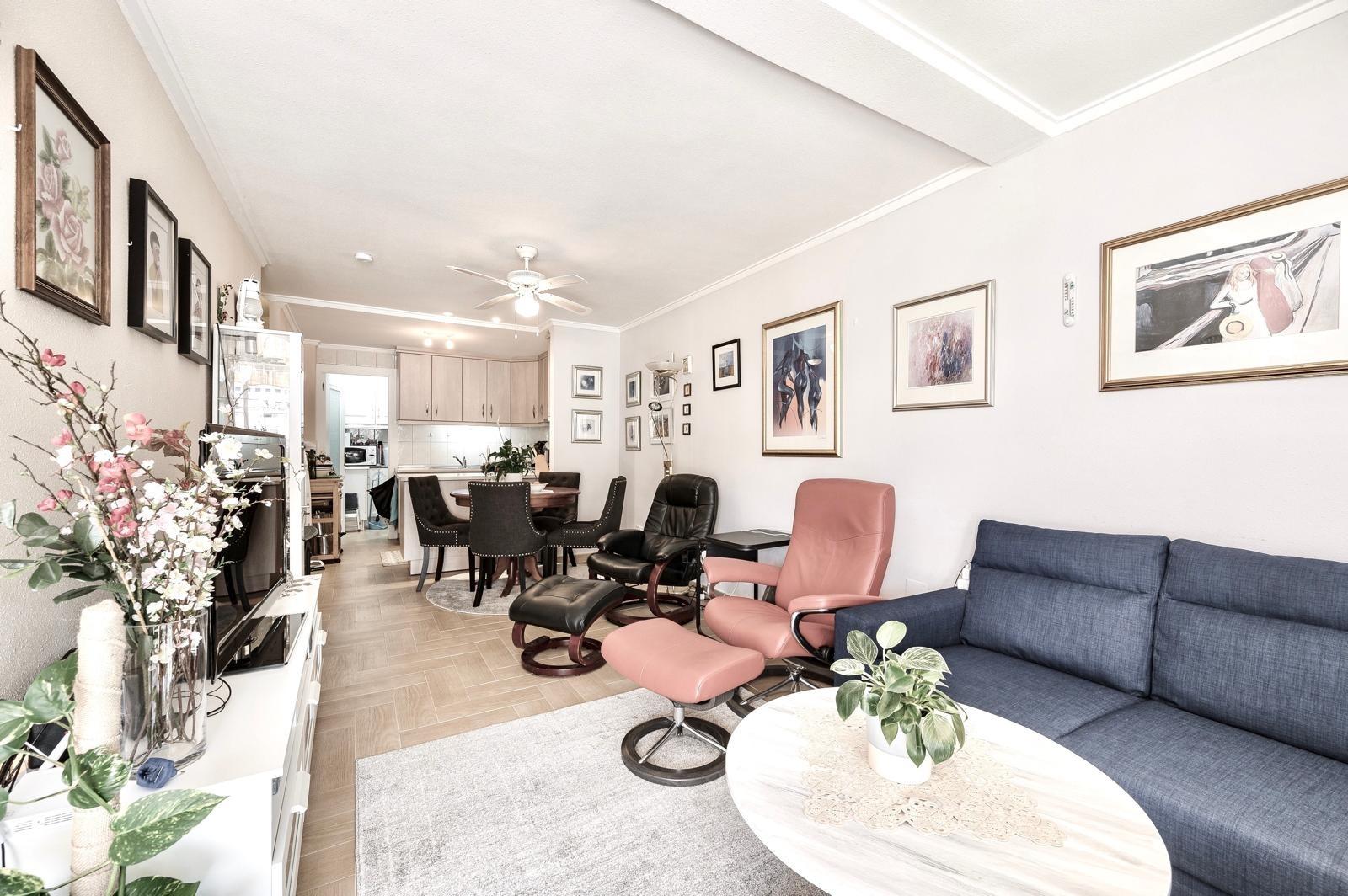 €189,900
 New build€289,900
 New build€365,000
 New build€469,900
 New build€660,000
 New build€1,600,000
Tax residency: the question to settle before you buy, not after
This is the part Swedish buyers most often get wrong, and it is the part with the largest financial consequences.
Owning property in Spain does not make you Spanish tax-resident. Spending most of the year here can. Spain applies the standard 183-day test plus a centre-of-economic-interests test, and either can catch you. If you become resident, Spain taxes your worldwide income: pension, Swedish rental income, capital gains, the lot.
Sweden, meanwhile, does not simply let go. Swedish rules on when your ties are genuinely severed look at whether a home remains available to you, where your family is and what business interests remain, and the burden of showing you have left sits with you for a period after departure. It is entirely possible to be treated as resident in both countries at once, at which point the double taxation treaty between Sweden and Spain and the domestic credit rules decide who taxes what.
We are property advisers, not tax advisers, so here is the only tax advice we will give: model your actual position with someone who does both jurisdictions before you sign the arras contract, not after you complete. The structure of the purchase (whose name it goes in, whether a Swedish home is kept, how long you stay each year) is much cheaper to get right at the start.
If you are not becoming resident, you are a non-resident owner, and Spain levies an annual non-resident tax on a deemed benefit from the property even when it earns nothing. Budget for it, along with IBI, community fees and rubbish collection. Our guide to what is on the market is only half the picture; the running costs are the other half.
Kronor, euros, and the gap nobody plans for
The price is in euros. Your money is in kronor. Between the day you agree a price and the day you complete, weeks pass, and the exchange rate does whatever it does. On a €250,000 apartment, an unfavourable move of a few per cent is a real sum of money, and it lands entirely on you.
Three practical points. First, your high-street bank is rarely the cheapest way to move a large sum; specialist currency brokers usually quote a tighter spread and no transfer fee. Second, ask about a forward contract, which lets you fix a rate now for a payment later. That turns an open currency position into a known number. Third, open the Spanish bank account early: you will need it for the notary payment, and afterwards for the direct debits that pay your community fees, IBI and utilities. Spanish utilities effectively require a Spanish account.
You will also need a NIE, the Spanish foreigner's tax number. Nothing happens without it: you cannot complete, open an account or connect electricity. Apply early, because appointment availability is the single most common cause of a delayed completion.
Four apartments across the Swedish range
 €169,000
New-build one-bed, Guardamar town
Guardamar Del Segura · Zona Pueblo
 €175,000
Two-bed apartment, Los Dolses
Orihuela Costa · Los Dolses
 €209,708
New-build two-bed, Algorfa
Algorfa · Pueblo 3
What to do next
Come with a written budget that already includes the 10% tax, the legal fees and the furniture, not the number you can stretch to for the property alone. Bring your months: a buyer who is here from November to March needs a different apartment from one who comes in August. And be honest about the stairs.
Tell us your budget and your season below and we will send a shortlist from the apartments currently on our book, including which ones we would advise against and why. If you would rather test the coast first, look at our long-term rentals and buy next winter instead. Get in touch. We work in Swedish.