

Key Takeaways
- ✓ Always visit a property at least twice, once during the day and once in the evening to check noise, lighting and neighbourhood feel.
- ✓ Spanish properties do not require a mandatory home survey for purchase, so the responsibility is on you to inspect thoroughly.
- ✓ Check the nota simple (land registry extract) for debts, charges, boundaries and legal ownership. Your lawyer handles this.
- ✓ Test all taps, drains, electrics and shutters during your viewing. Plumbing and wiring issues are the most common hidden problems.
- ✓ For older properties (pre-2000), budget €5,000–€15,000 for potential upgrades to plumbing, electrics or windows.
Why Inspections Matter in Spain
Unlike the UK, Ireland or Scandinavia, Spain does not have a standardised pre-purchase home survey system. There is no legal requirement for a structural survey before buying, and most Spanish sellers do not provide one. This means the burden falls entirely on the buyer to identify defects, structural issues and potential problems before committing to a purchase.
Many international buyers, particularly those purchasing holiday homes, view a property just once (often in beautiful sunshine with the sea visible from the terrace) and make an emotional decision without examining the details. This is how problems get missed. At OceanHome, we always recommend at least two visits: one to get the overall feel and one specifically focused on the checklist below. If you cannot visit in person, we can conduct a detailed video inspection on your behalf.
For properties over €300,000 or any property that is more than 30 years old, we strongly recommend commissioning an independent technical survey (informe técnico) from a qualified architect or surveyor (arquitecto técnico). This costs €300–€800 depending on the property size and provides a professional assessment of structural integrity, damp, subsidence and major systems.
Exterior and Structural Checks
Roof and terrace. Look for cracked or missing tiles, sagging sections, and water stains on ceilings directly below flat roofs or terraces. Flat roofs (common in Spanish apartments) are particularly prone to leaks if the waterproof membrane has not been maintained. Ask when the roof was last waterproofed. It should be done every 8–10 years.
Walls and façade. Walk around the entire exterior. Look for cracks (hairline cracks in render are normal; diagonal cracks from corners of windows or doors can indicate structural movement), damp patches, efflorescence (white salt deposits indicating moisture), and any signs of subsidence or settlement. In coastal areas, salt air can accelerate corrosion of reinforced concrete. Look for rust stains or exposed rebar on balconies and pillars.
Windows and shutters. Open and close every window and shutter. Check the seals, hinges and locks. Aluminium windows with thermal break are standard in modern Spanish construction; older properties may have single-glazed aluminium frames that are poor for insulation and noise. Budget €300–€600 per window to upgrade if needed.
Terrace and balconies. Check for cracks in the tiling, water pooling (indicating poor drainage), and any separation between the terrace and the building wall. Terraces in Spanish apartments often extend over the unit below: a leak in your terrace becomes a ceiling leak for your neighbour, and you may be liable for repair costs.
Interior Systems: Plumbing, Electrics and HVAC
Plumbing. Turn on every tap (hot and cold) and flush every toilet. Check water pressure. Low pressure in upper-floor apartments is common in older Spanish buildings. Look under sinks for leaks, damp or mould. Check the hot water system: is it an electric boiler (termo), gas boiler (caldera) or solar? Ask when it was last serviced. In properties with old galvanised steel pipes, budget €3,000–€6,000 for a full replumb to copper or plastic.
Electrics. Check that the electrical panel (cuadro eléctrico) has modern circuit breakers, not old fuse wire. Test light switches and plug sockets in every room. Ask for the boletín eléctrico (electrical certificate). This confirms the installation meets current regulations. Properties with old wiring (pre-1990) may need a full rewire, costing €3,000–€8,000 for a typical apartment. Check the contracted power (potencia contratada). Many Spanish properties have a low 3.45 kW contract that trips if you run an oven and air conditioning simultaneously. Upgrading is straightforward but costs €100–€200.
Air conditioning and heating. Test the air conditioning units in both heating and cooling modes. Central heating is rare on the Costa Blanca. Most properties use split-unit air conditioning for both. Check the age and condition of the units. A replacement split unit costs €800–€1,500 installed per room.
Community Areas and Documentation
Communal pool and gardens. Inspect the pool area, garden maintenance and parking. A well-maintained community indicates responsible management and adequate reserves. Ask to see the last three years of community meeting minutes (actas). These reveal planned works, disputes, derramas (special levies) and financial health. Your lawyer should request these as part of due diligence.
Community fees. Ask for the exact monthly fee and what it covers. Typical fees range from €30–€60/month for a basic apartment complex to €100–€200/month for complexes with large pools, lifts and gardens. Check whether there are any outstanding derramas or planned increases. Under Spanish law, the buyer inherits any unpaid community debts from the current and previous year.
Energy certificate (certificado energético). By law, the seller must provide this before the sale. Ratings range from A (most efficient) to G (least efficient). Most older Costa Blanca properties score E–G. A low rating is not a deal-breaker but indicates higher utility costs and potential upgrade expenses.
Nota simple. Your lawyer obtains this from the land registry. It confirms the legal owner, property boundaries, any debts or charges (embargos, mortgages), and planning classification. Never proceed to contract without a clean, up-to-date nota simple.
Properties Ready to Inspect
Here are three properties currently available for viewing through OceanHome, each in a different condition to illustrate what to look for:
 €539,000
3-Bed Villa in Lago jardin
Torrevieja · Lago jardin
 €190,000
1-Bed Apartment in La Zenia
Orihuela Costa · La Zenia
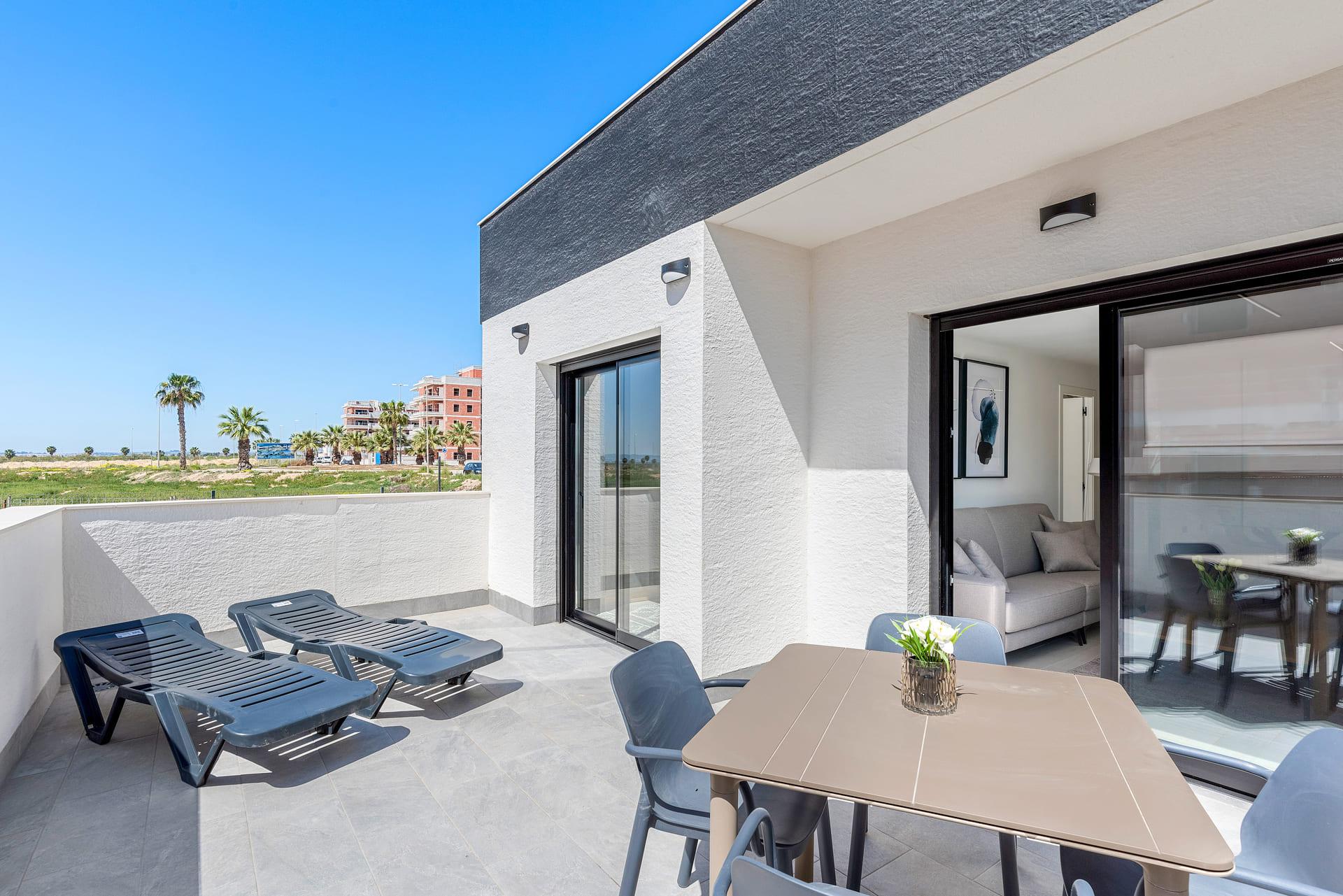 €241,000
3-Bed Apartment in EL RASO
Guardamar Del Segura · EL RASO
Ready to view? Contact our team to schedule an inspection or request a detailed video tour of any property in our portfolio.